

The Coalesce practitioner panel, the engineers and delivery leads running agentic data migrations in production, built this guide from real programs, not theory. It covers stored procedures, legacy ETL, and hand-written SQL moving to Snowflake, Databricks, Microsoft Fabric, or Google BigQuery.
Inside you’ll find:
- How to scope an estate, choose a strategy, and plan sprints by usage before an agent touches a file
- How the six-stage loop converts one file at a time, and how reconciliation tells you the numbers match
- What a person reviews before promoting each pipeline, and how to run the dual-run window
Get the free guide
By the numbers
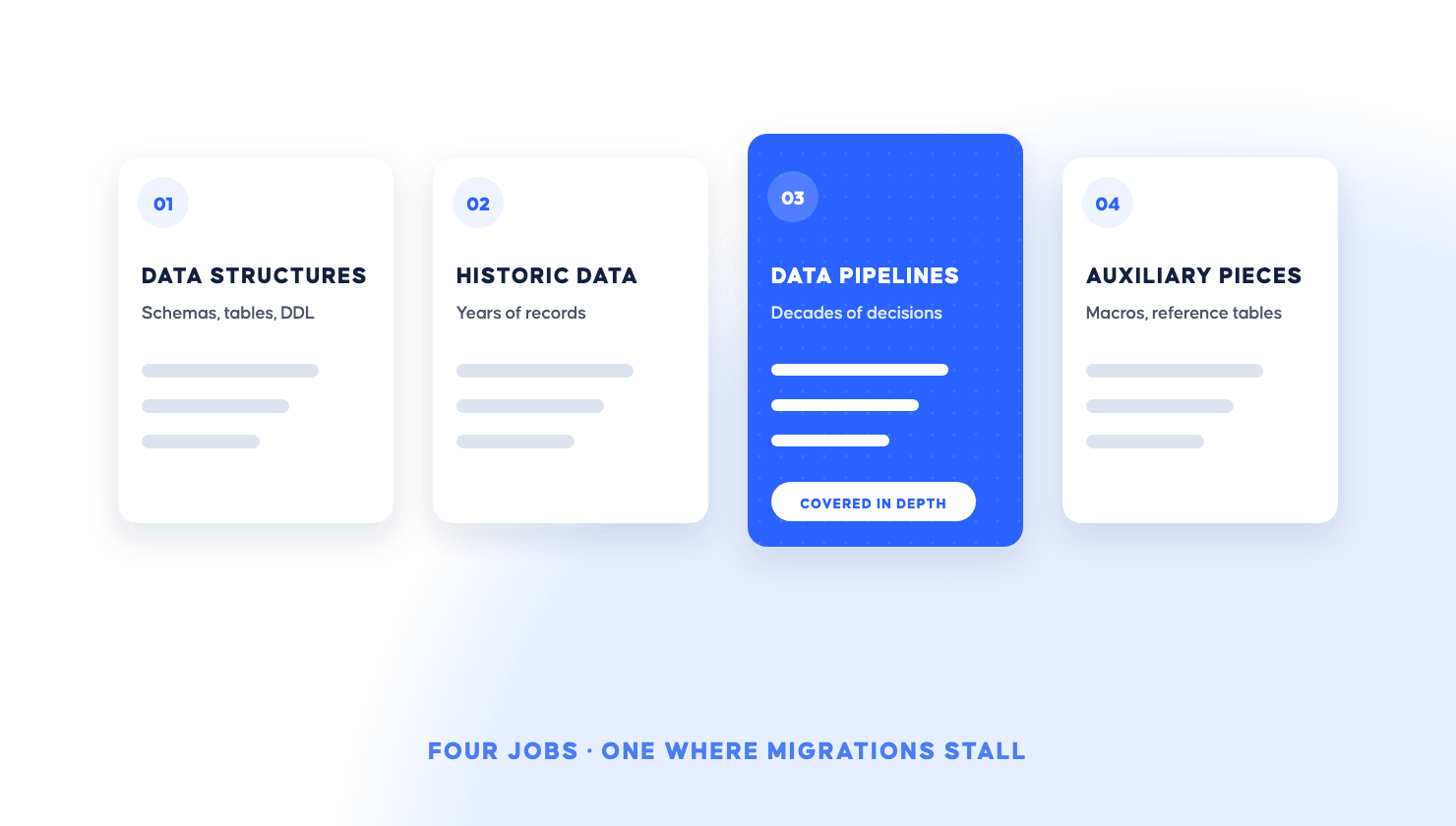
A migration is four jobs: the data structures, the historic data, the pipelines, and the auxiliary components around them, such as macros and reference tables. The pipelines are where migrations stall, because they carry decades of undocumented decisions.
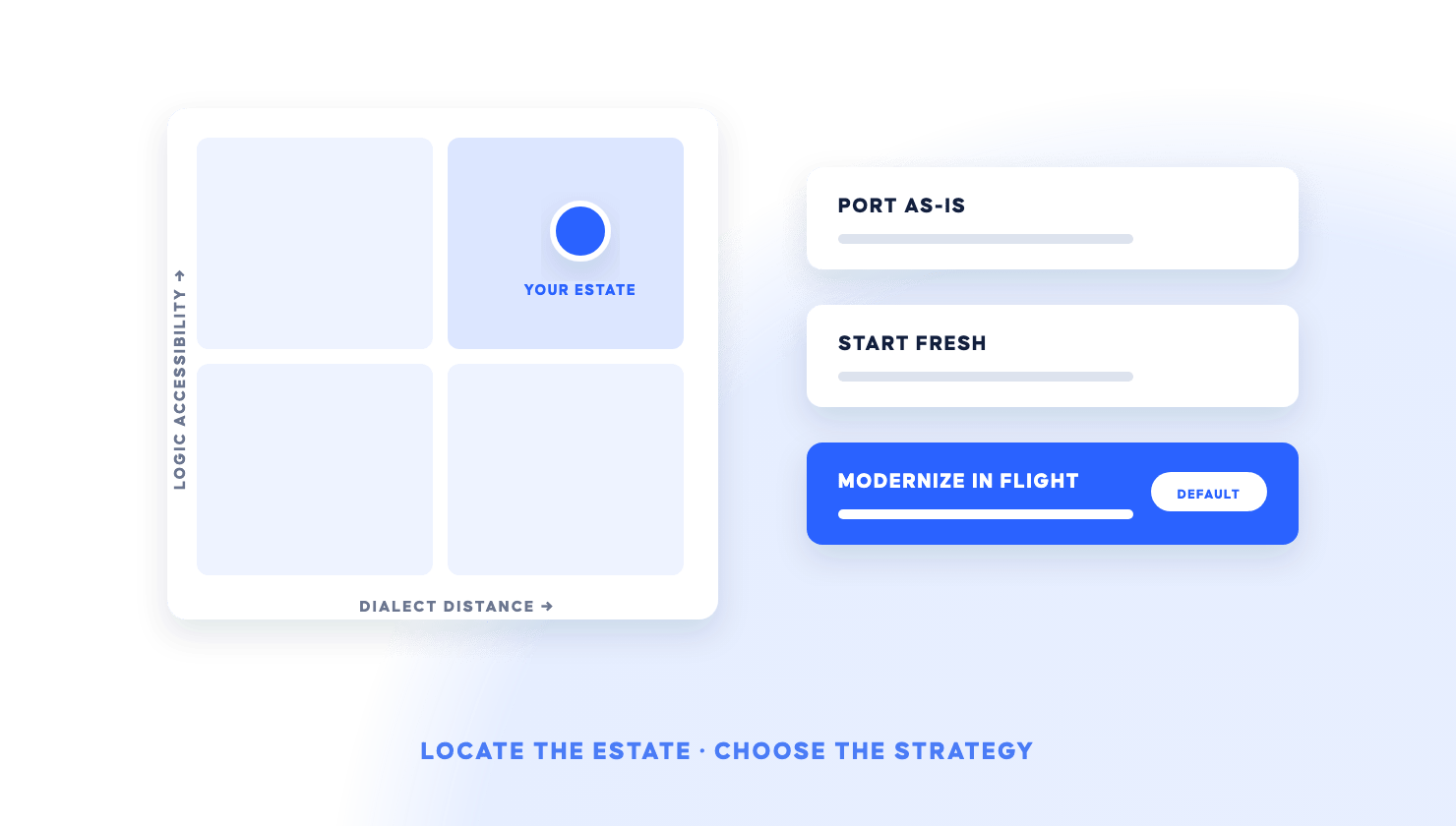
Locate your estate on the difficulty map, then choose between porting as-is, starting fresh, and modernizing in flight.
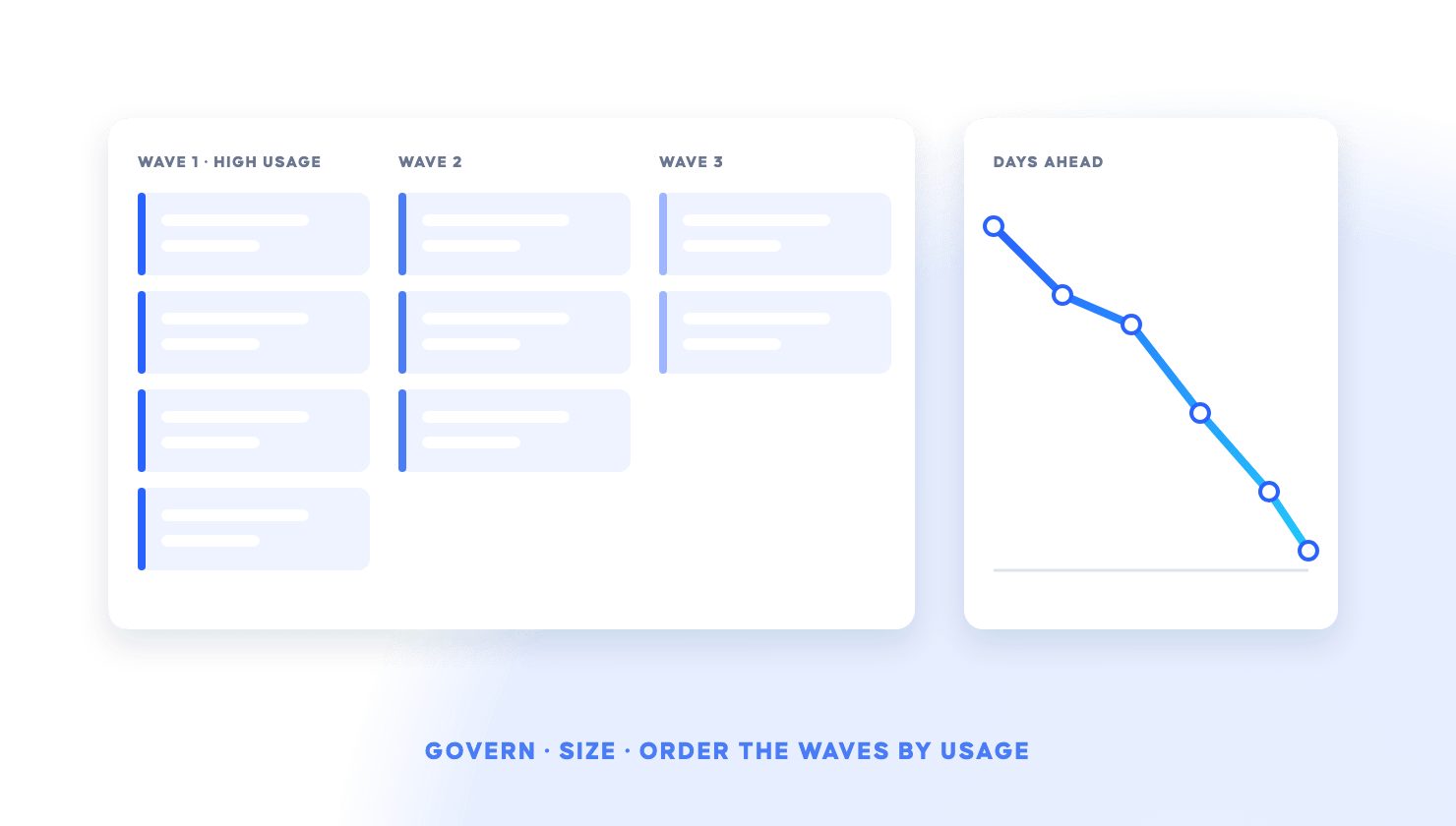
Govern what agents can touch, size the estate, order the sprints by usage, and run the program from your team’s board.
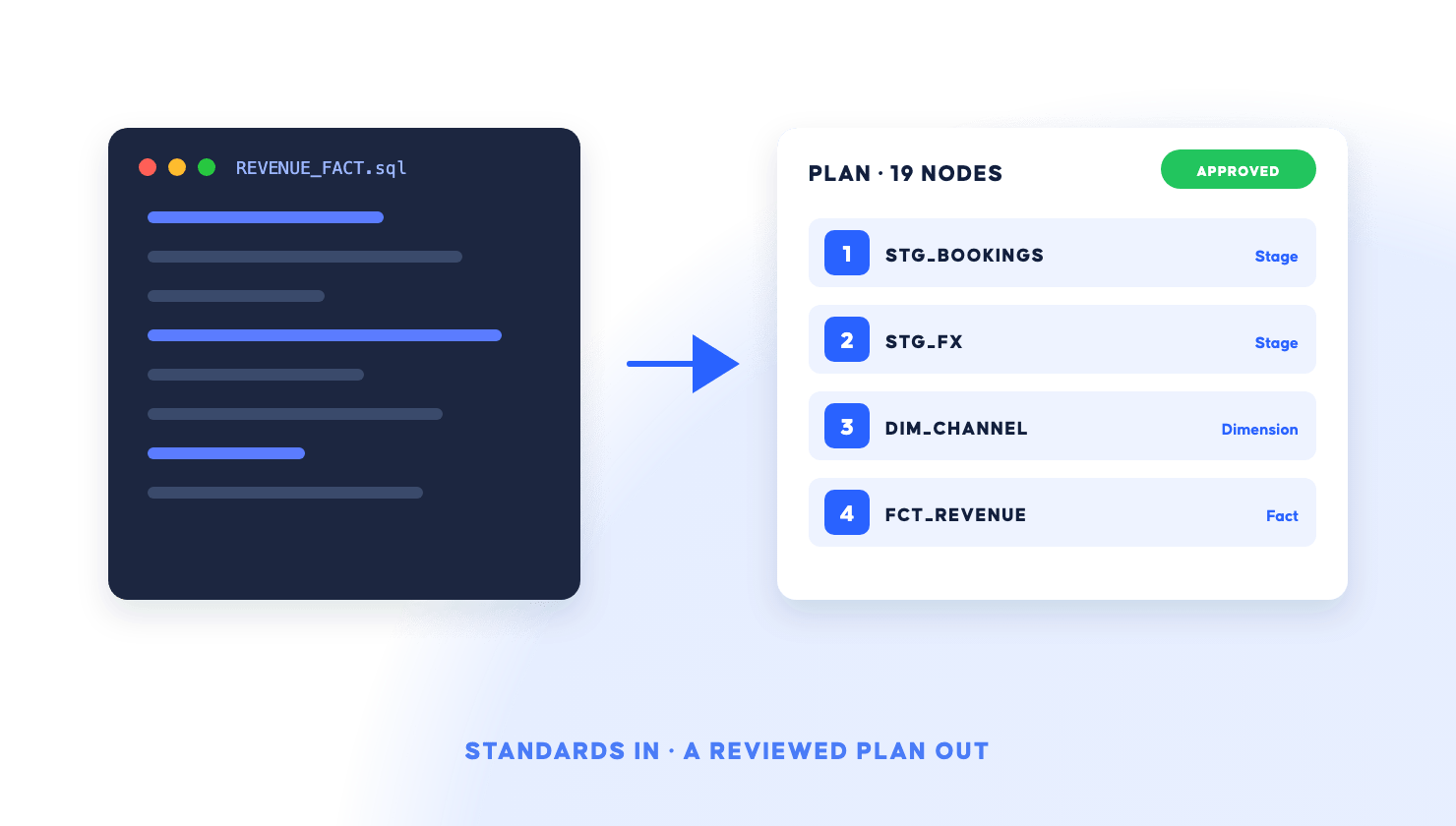
State your standards, let the agent reconstruct what the source does, and set the grain of the plan before any build starts.
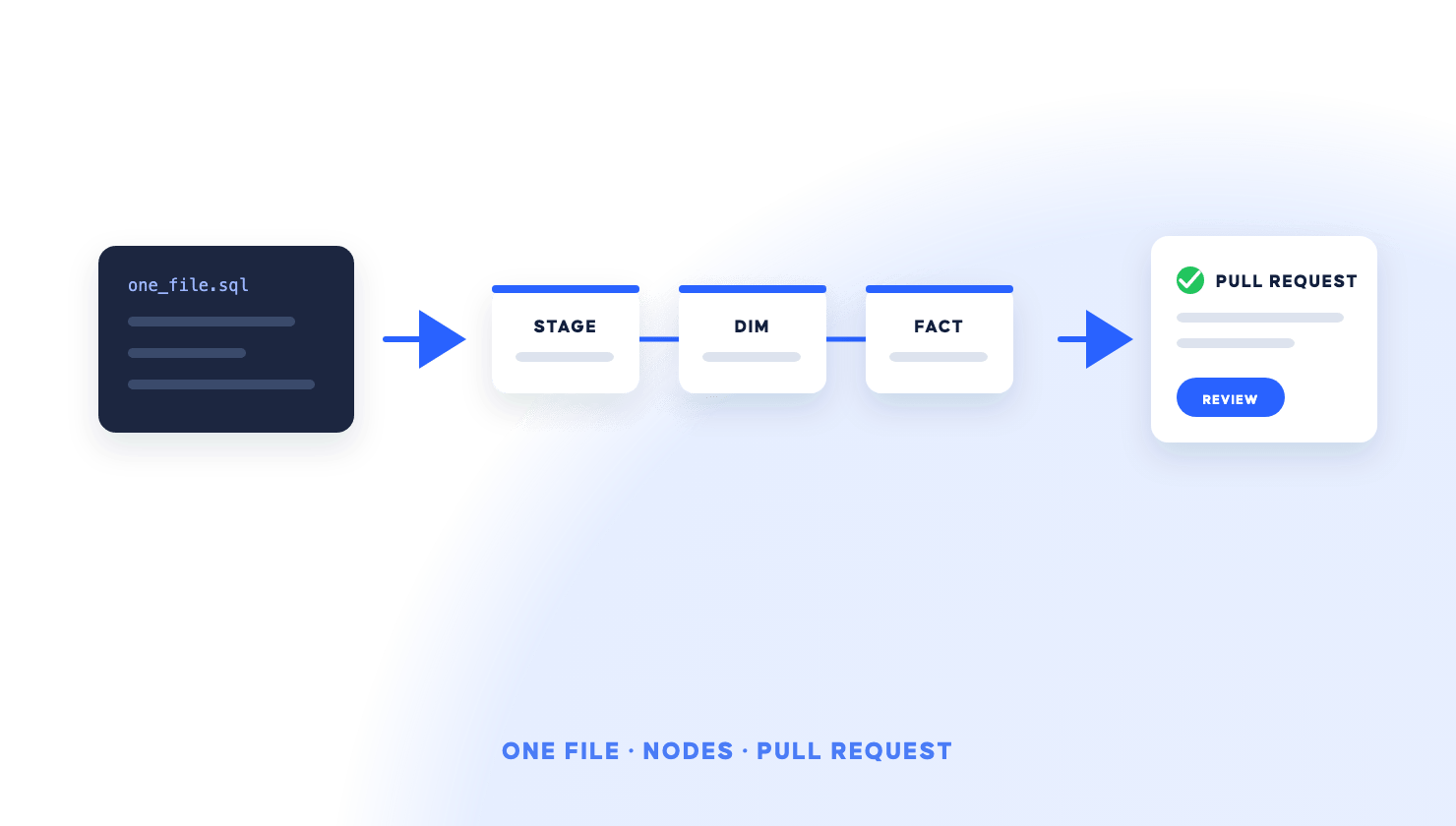
Start with one file, build and configure the Nodes, and land the work in Git through a pull request.
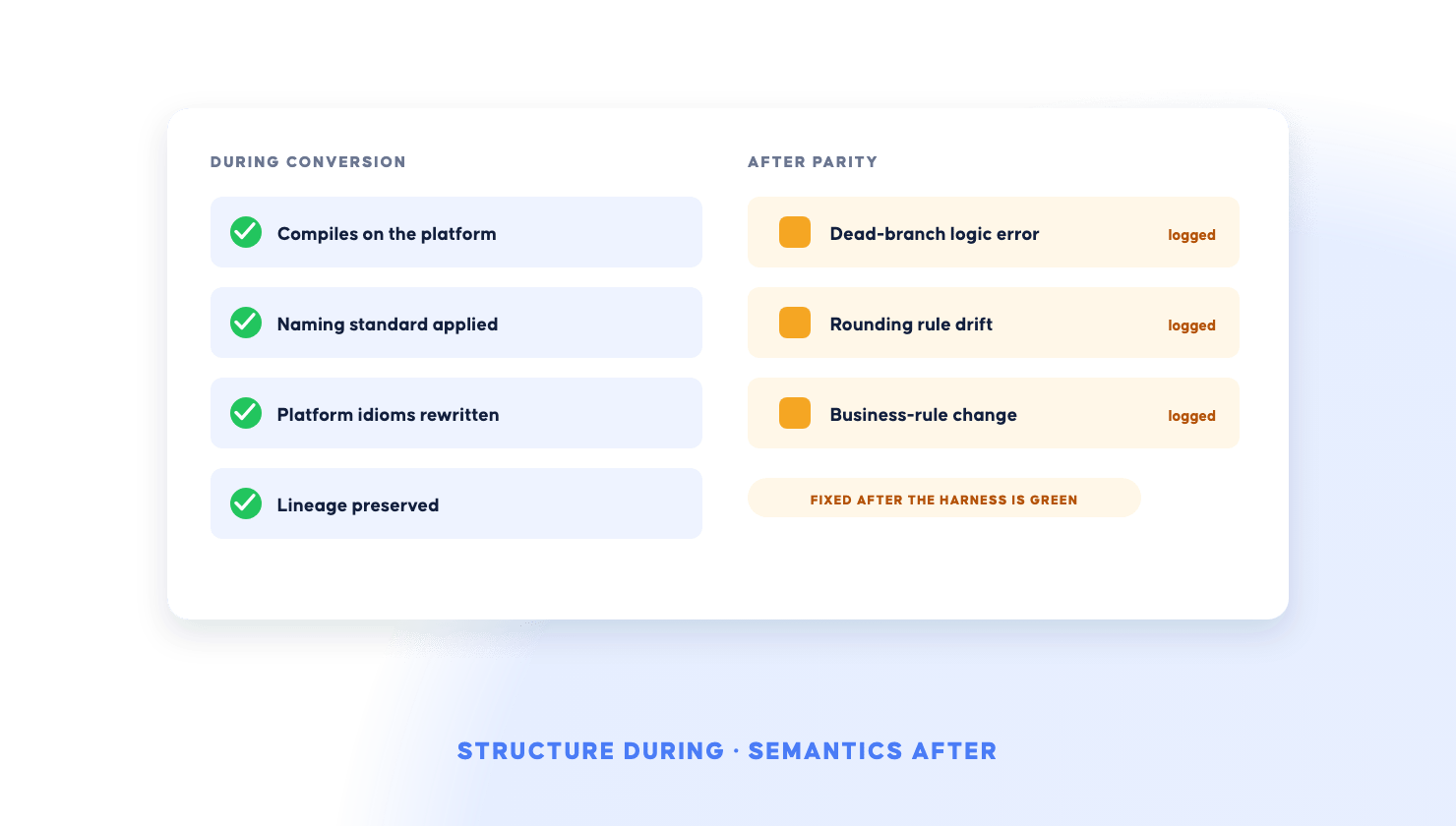
The first round of validation, and the rule for what changes during conversion and what waits for parity.
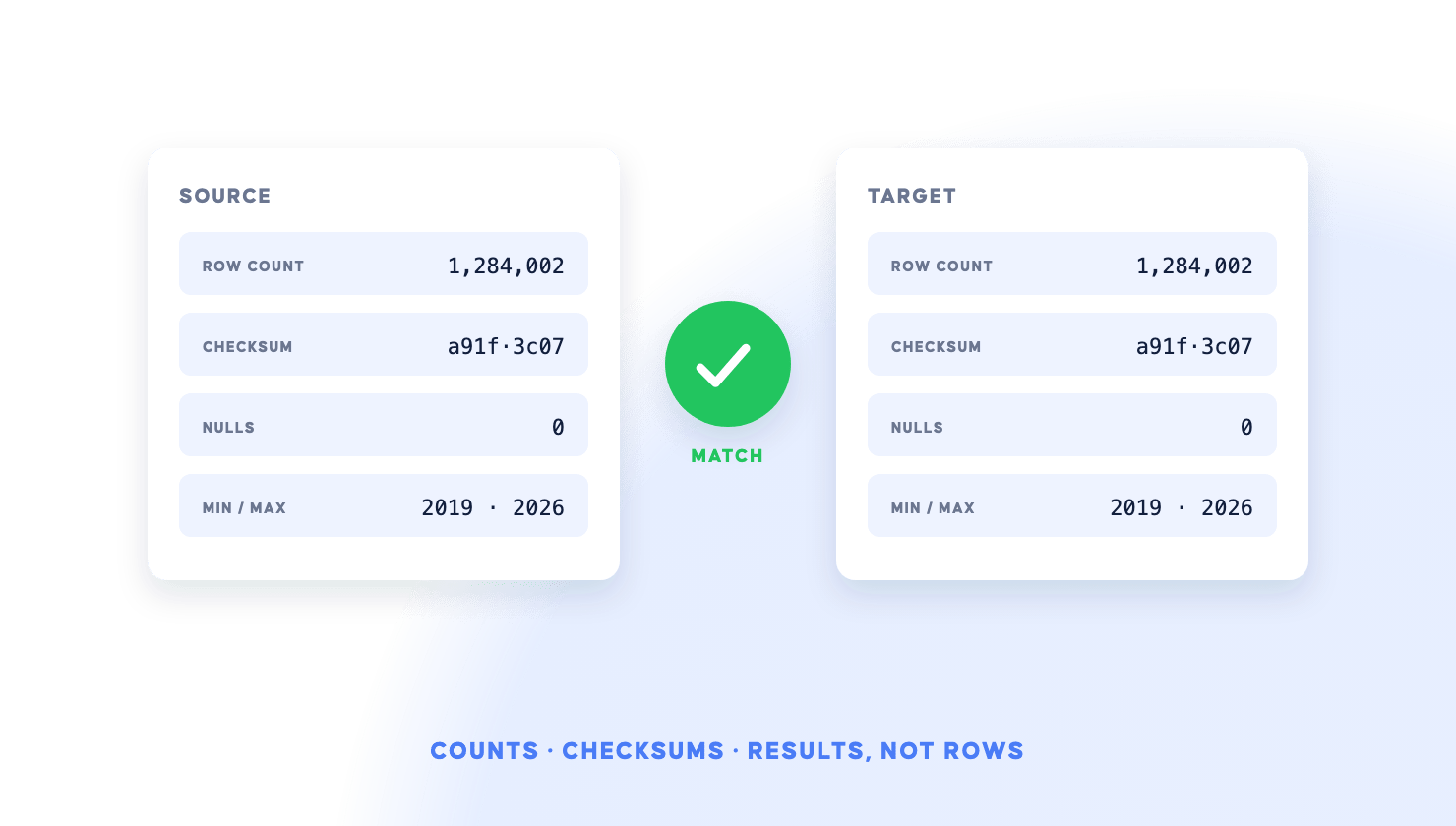
Define the comparison, run the quick check, and let the agent iterate until the numbers match, working from results, not rows.
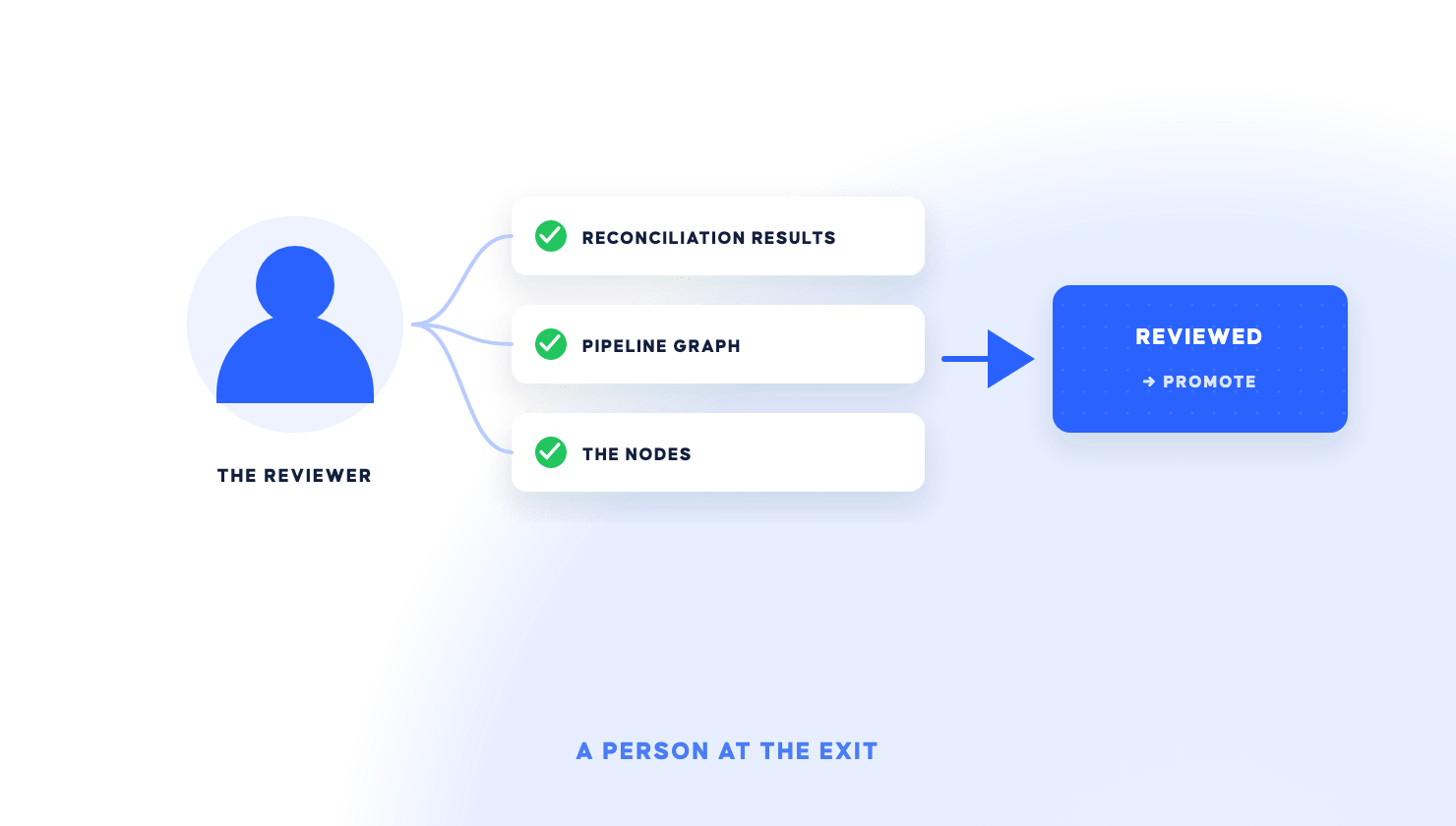
What a person reads before marking a pipeline reviewed and promoting it, and where the humans belong.
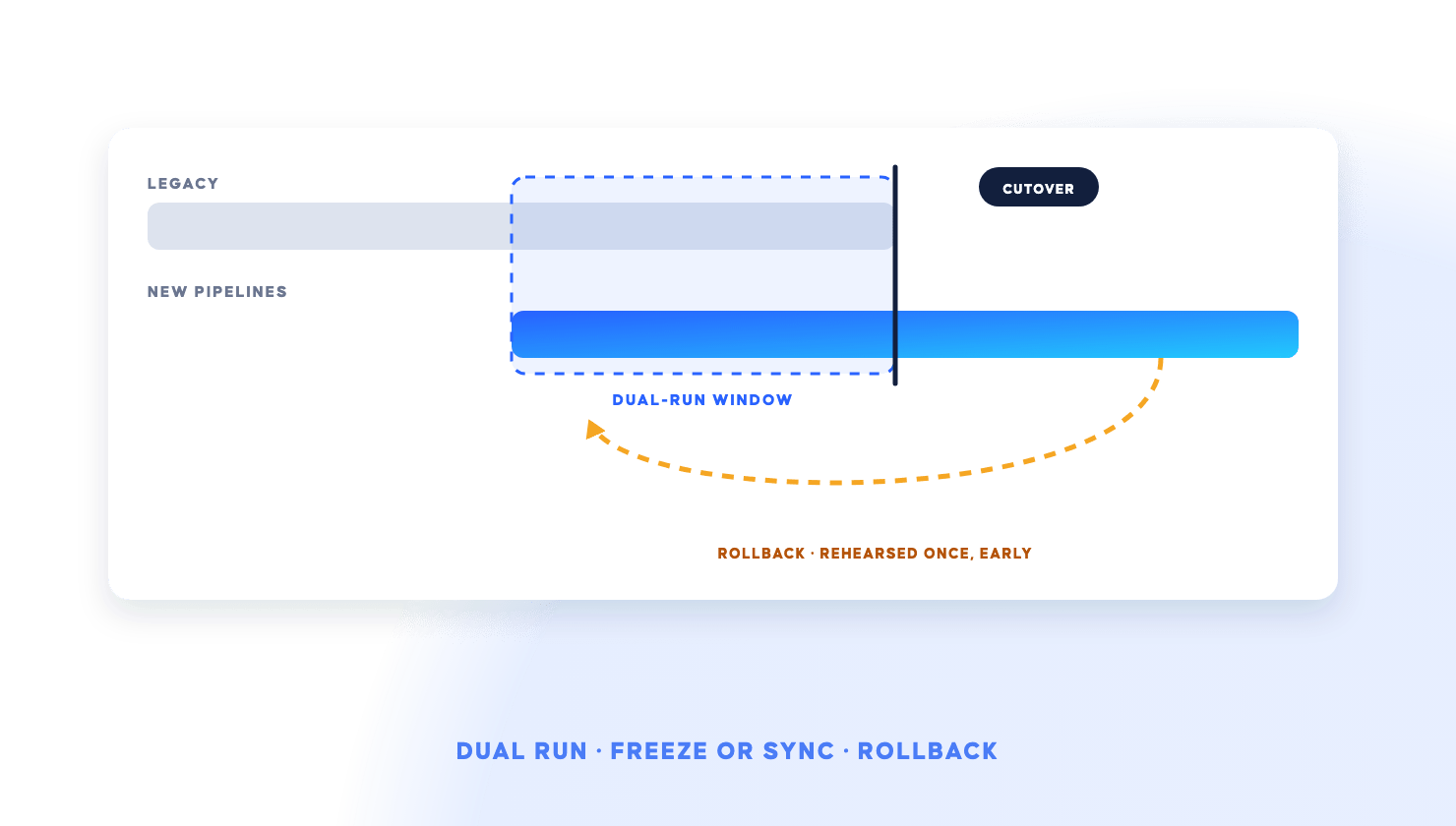
Run the loop across a batch, then plan the dual-run window, the freeze-or-sync policy, and a rollback you’ve rehearsed.
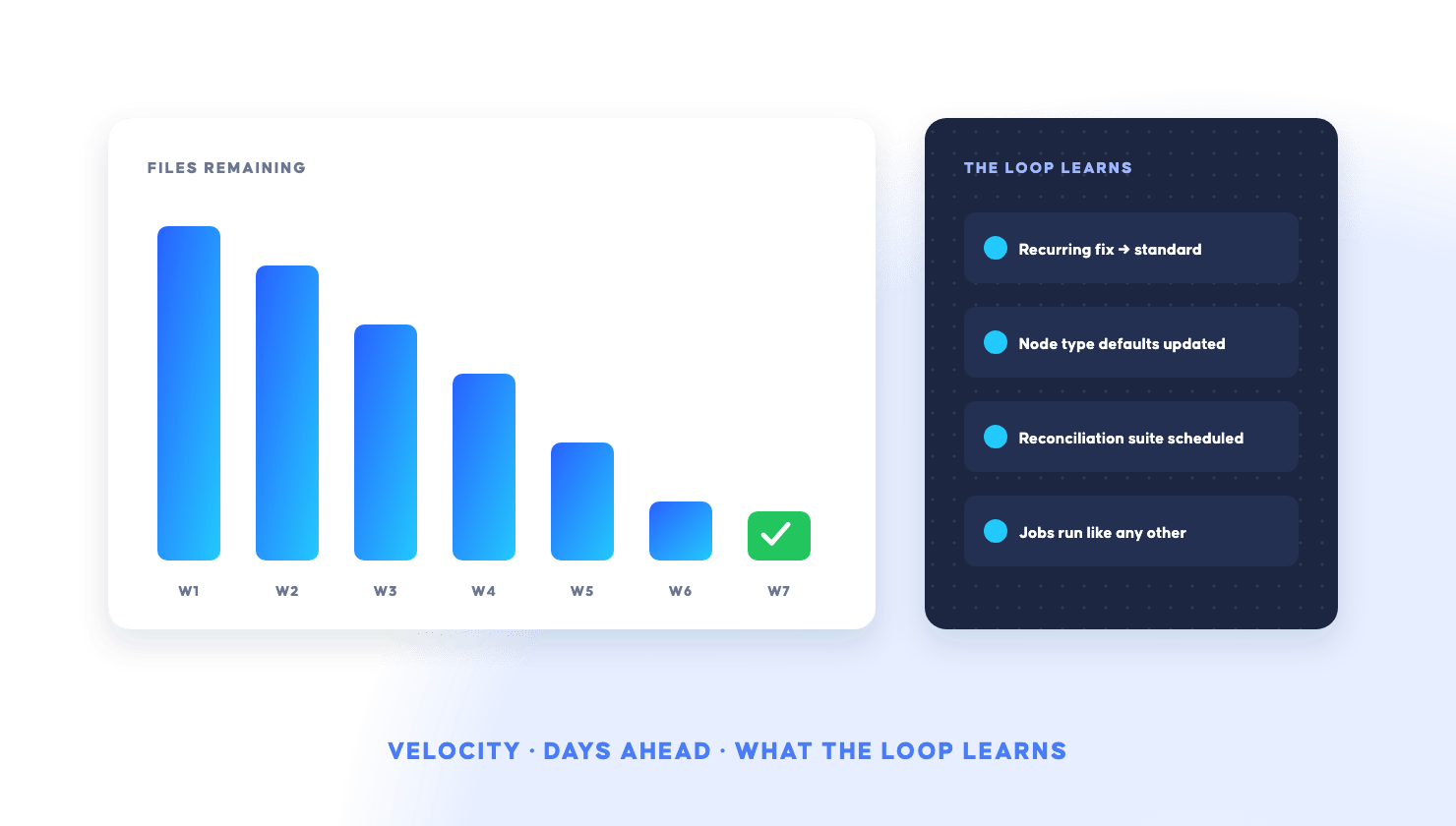
What the loop learns from having run, and what your team owns when the last release goes live.
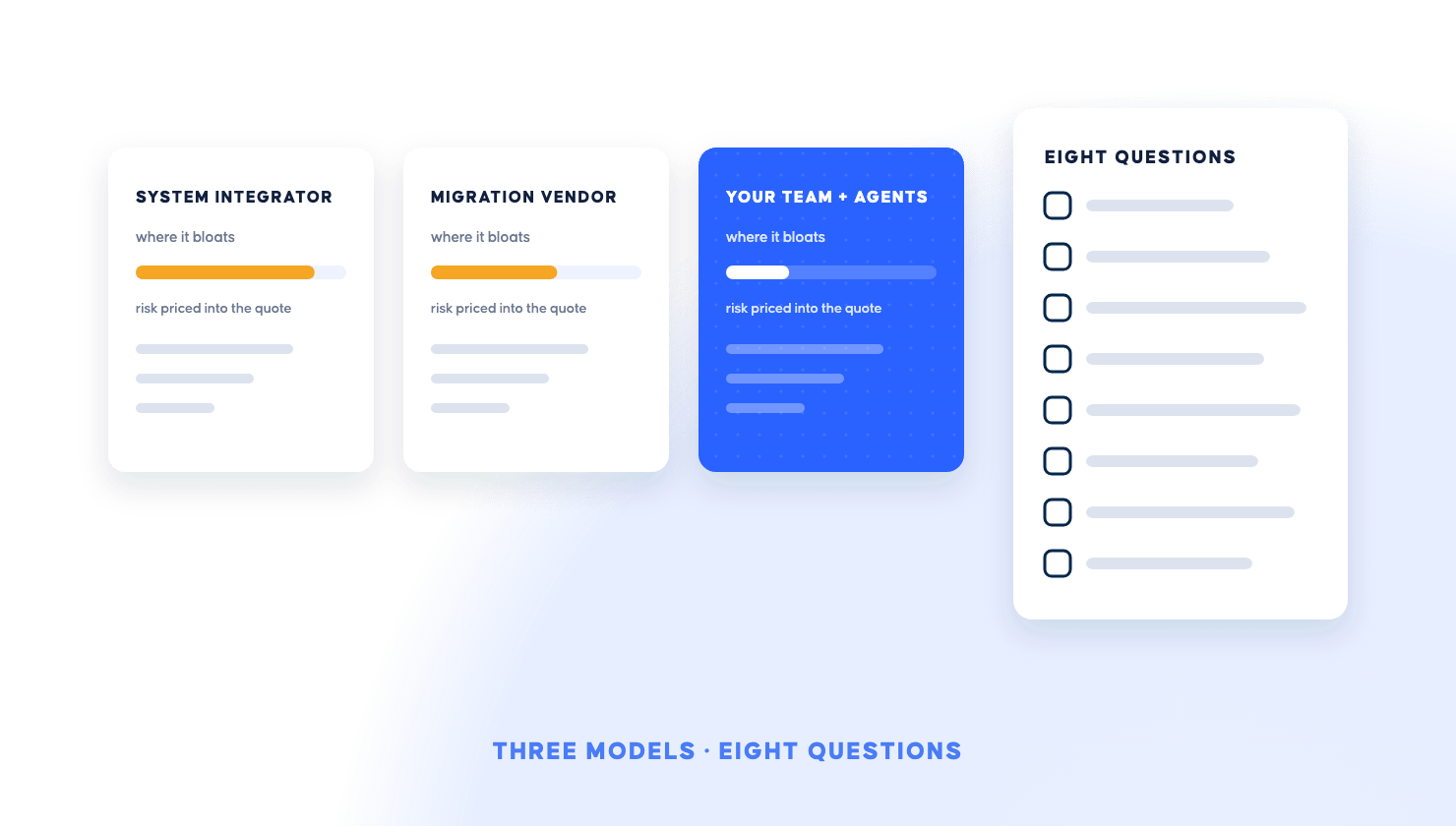
Where engagements bloat, how each delivery model prices the risk, and an eight-question diligence checklist for any vendor call.
The Problem
Nobody plans a two-year migration
They plan a two-quarter migration, then discover what the plan didn’t cover: the stored procedure nobody understands, the dialect quirk that breaks silently, the validation work that doubles every estimate.
A migration is four jobs: the data structures, the historic data, and the pipelines. The pipelines are where migrations stall, because they carry decades of undocumented decisions.
This guide is the playbook for that job: what AI agents change about it, and the evidence trail that makes it governable.
The Solution

Per file The loop
Analyze, plan, build, configure, validate, and reconcile data. When a check fails, the findings go back into build until the reconciliation passes.
Per pipeline The review
A person reads the results, the pipeline graph, and the Nodes, marks the pipeline reviewed, and promotes it.
Per program The discipline
Sprints ordered by usage, a rehearsed rollback, and recurring fixes that join your standards once a person has reviewed them.
About the authors

The Coalesce practitioner panel
The engineers and delivery leads running agentic data migrations in production. This guide describes how that work runs today, drawn from the programs they deliver.
Get the guide
Eleven chapters on scoping, the six-stage loop, reconciliation, review, and running the program, with one stored procedure traced from source SQL to promoted pipeline. Explore the interactive web version and the downloadable PDF.
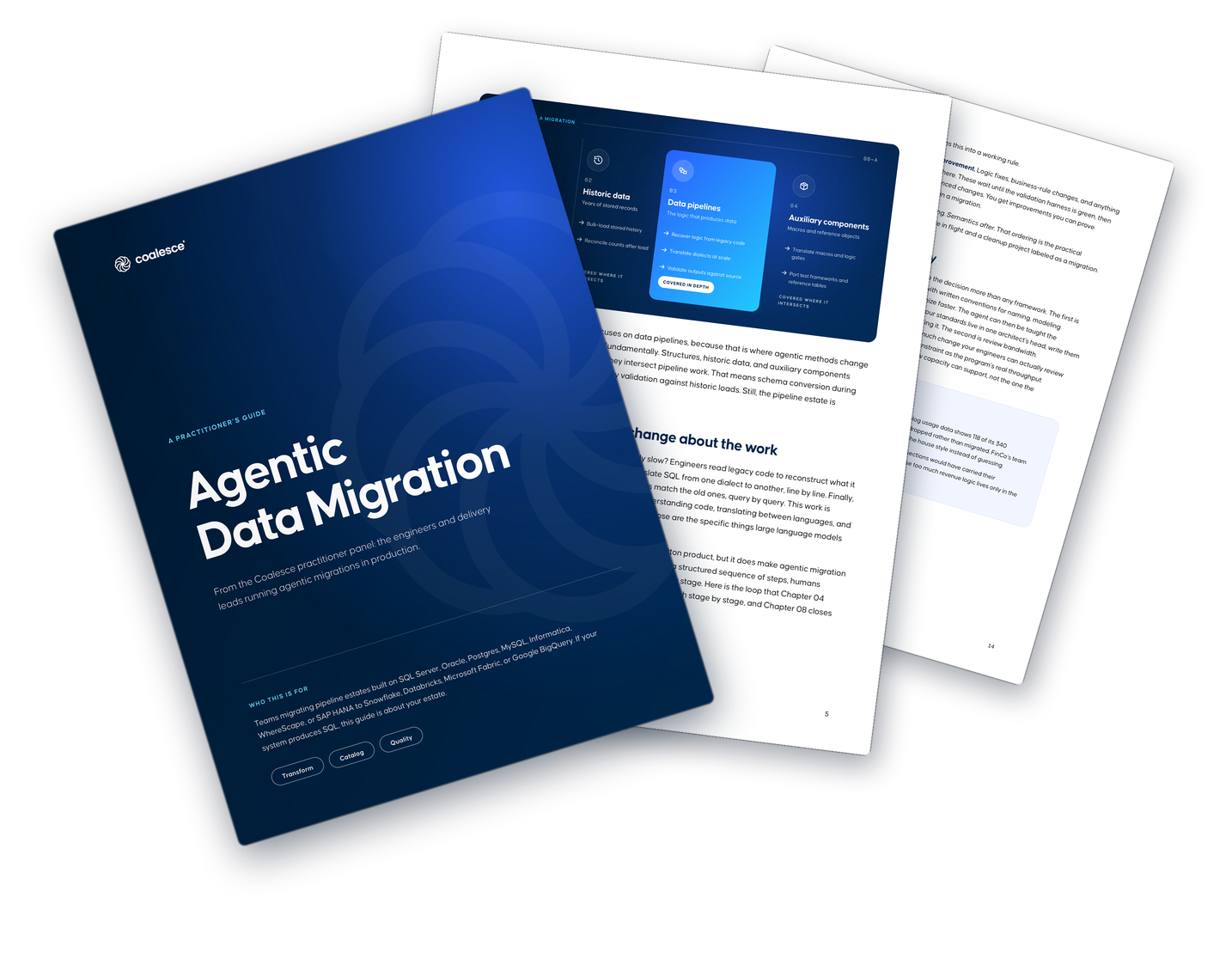
Agentic data engineering means using AI inside the workflows and tools you already run, connected through MCPs, CLI, and APIs, with the agent working against your platform directly and a person verifying the result. Agentic data migration applies that practice to moving a pipeline estate: the agent converts and reconciles your pipelines one file at a time, and a person reviews each one before promoting it. The Agentic Data Engineering guide covers the foundations.
The loop runs on the Coalesce platform, and each stage chapter closes with an “In Coalesce” section. The chapters on strategy, sizing, sprint planning, the dual-run window, and vendor diligence apply to any migration.
Any estate that produces SQL. Sources include SQL Server, Oracle, Postgres, MySQL, SAP HANA, and legacy ETL platforms; destinations include Snowflake, Databricks, Microsoft Fabric, and Google BigQuery.
Analyze, plan, build, configure, validate, and reconcile data. The agent runs the loop one file at a time. When validation or reconciliation finds a problem, the findings go back into build, and the agent iterates against the reconciliation result until it passes. Then a person reviews the pipeline and promotes it.
The agent defines the comparison, runs a quick check, drills into what differs, and iterates until the numbers match. Coalesce Quality computes counts and checksums where the data lives, so by default the agent sees results, not rows.
A person, before anything moves to the next environment. The reviewer reads the reconciliation results, the pipeline graph, and the Nodes, then marks the pipeline reviewed and promotes it. On the first files, a person also reviews the agent’s plan.
Usually not. The guide’s two-tier rule: make structural changes, such as naming standards and platform idioms, during conversion; log the semantic issues you find and fix them after the pipeline reaches parity.
Chapter 02 places your estate on two axes, how accessible the legacy logic is and how far the dialects differ, and compares the three strategies. With agents doing the translation, modernizing in flight is often the rational default, though porting as-is stays right for regulated, parity-first cutovers.
Chapter 11 closes with an eight-question diligence checklist for any vendor call, along with where engagements actually bloat and how each delivery model prices the risk.
No. It’s a fictional composite drawn from real migration programs, and it carries no performance claims.
Yes. Fill in the form to explore the interactive web version, and receive the full PDF in your inbox.