


This guide is built from real workflows, not theory — with prompts, skills, and playbooks running in production today, featuring practical tips you can lift and use whichever tools your team runs.
Inside you’ll find:
- What an MCP is, what an MCP server exposes, and how to understand any MCP through its tools
- How to write effective prompts, giving the model enough structure to be reliable without specifying every detail
- How to package repeatable workflows into reproducible skills, test and iterate on them, and put them into production as playbooks and agents
Get the free guide
By the numbers
The workflows covered in the guide: impact analysis, root cause investigation, governance rollout, and recurring reporting.
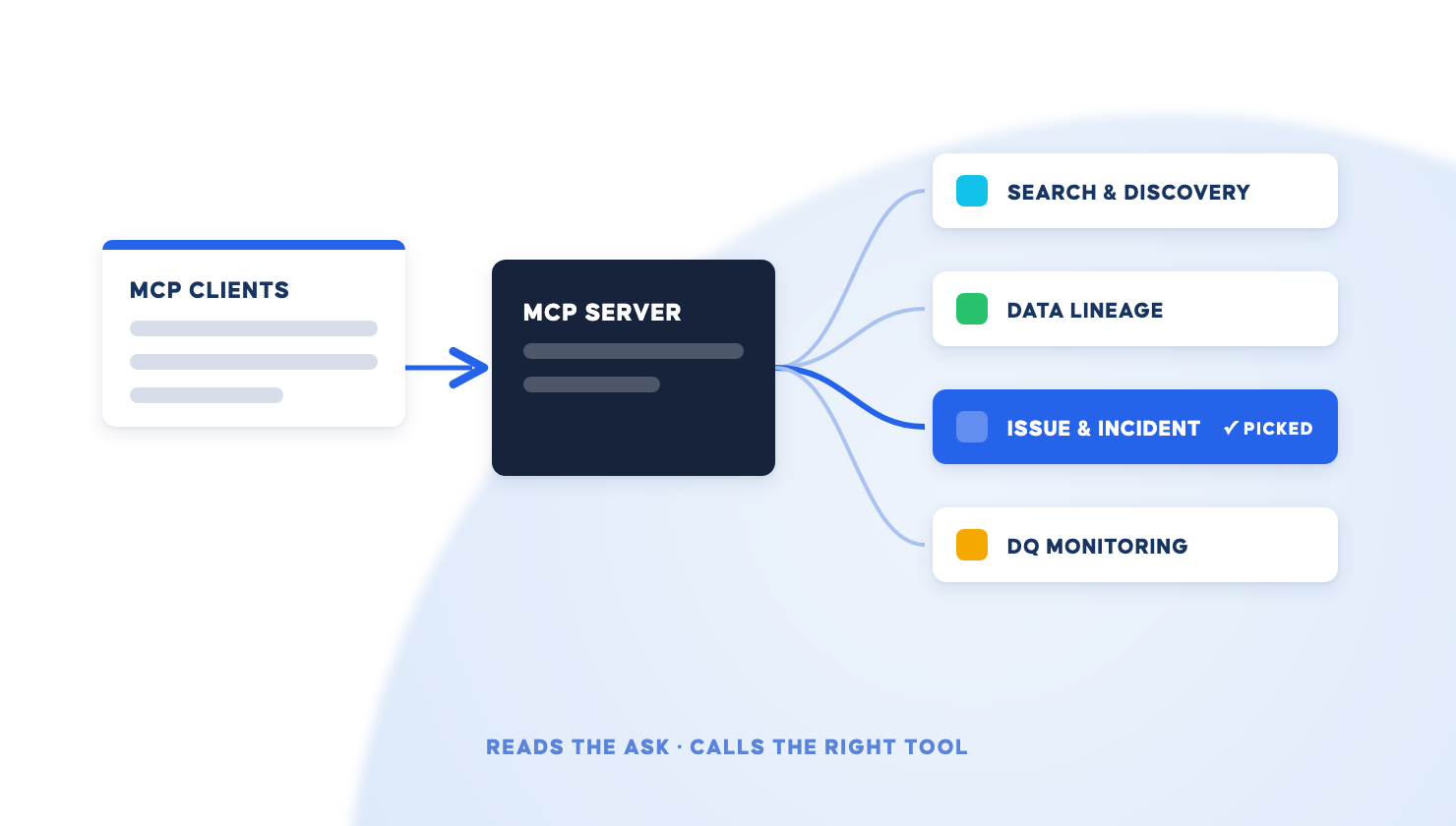
What an MCP is, what the Coalesce MCP servers expose, how to understand any MCP through its tools, and the three levels of working with them.
Ad hoc MCP use, one question at a time: what a good prompt includes, the same task prompted too specifically, too vaguely, and just right — plus the permission model for read vs. write access.
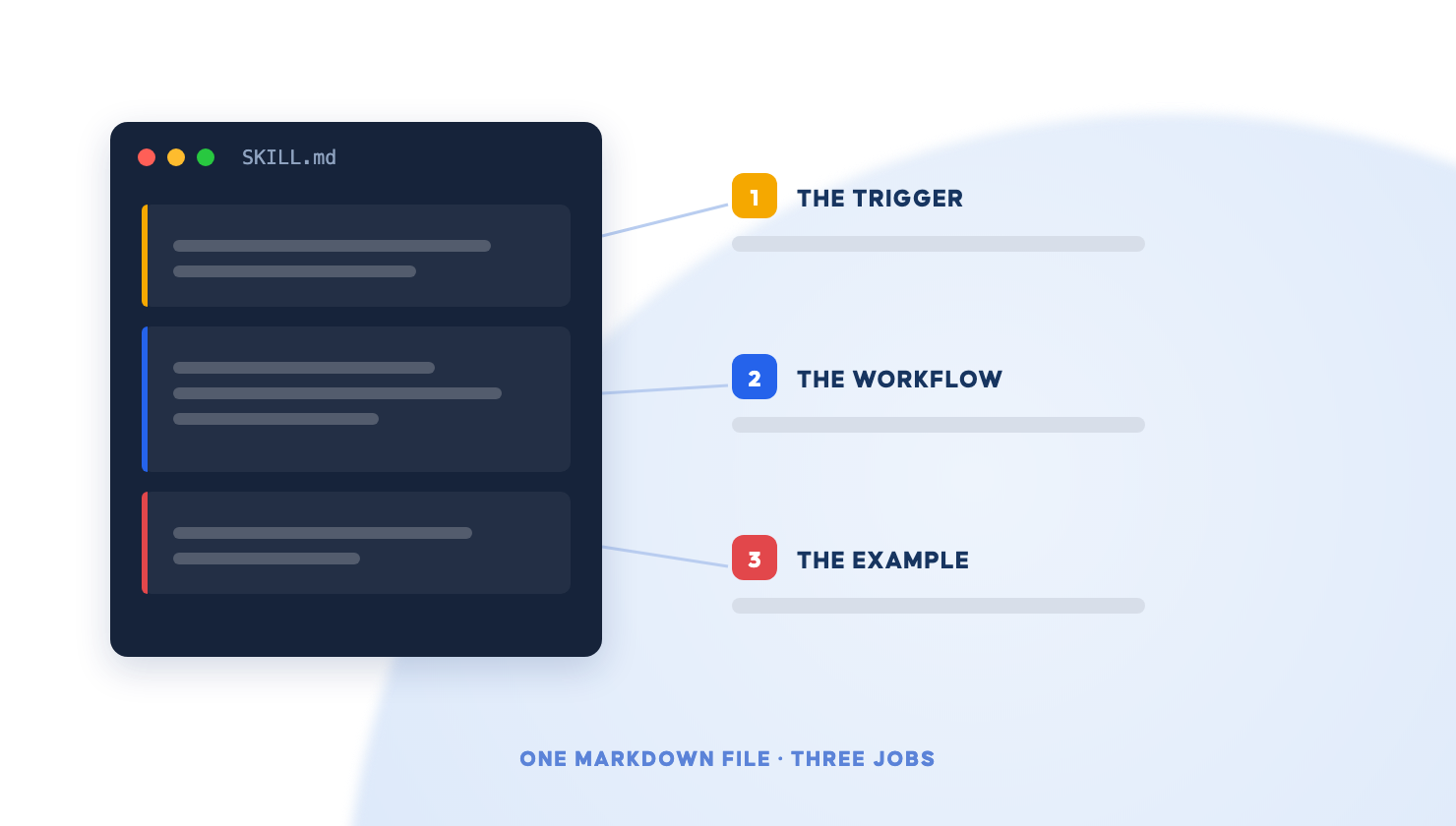
Packaging workflows into reproducible recipes: designing descriptions that trigger reliably, building a skill suite around jobs to be done, and evaluating whether a skill actually improves output.
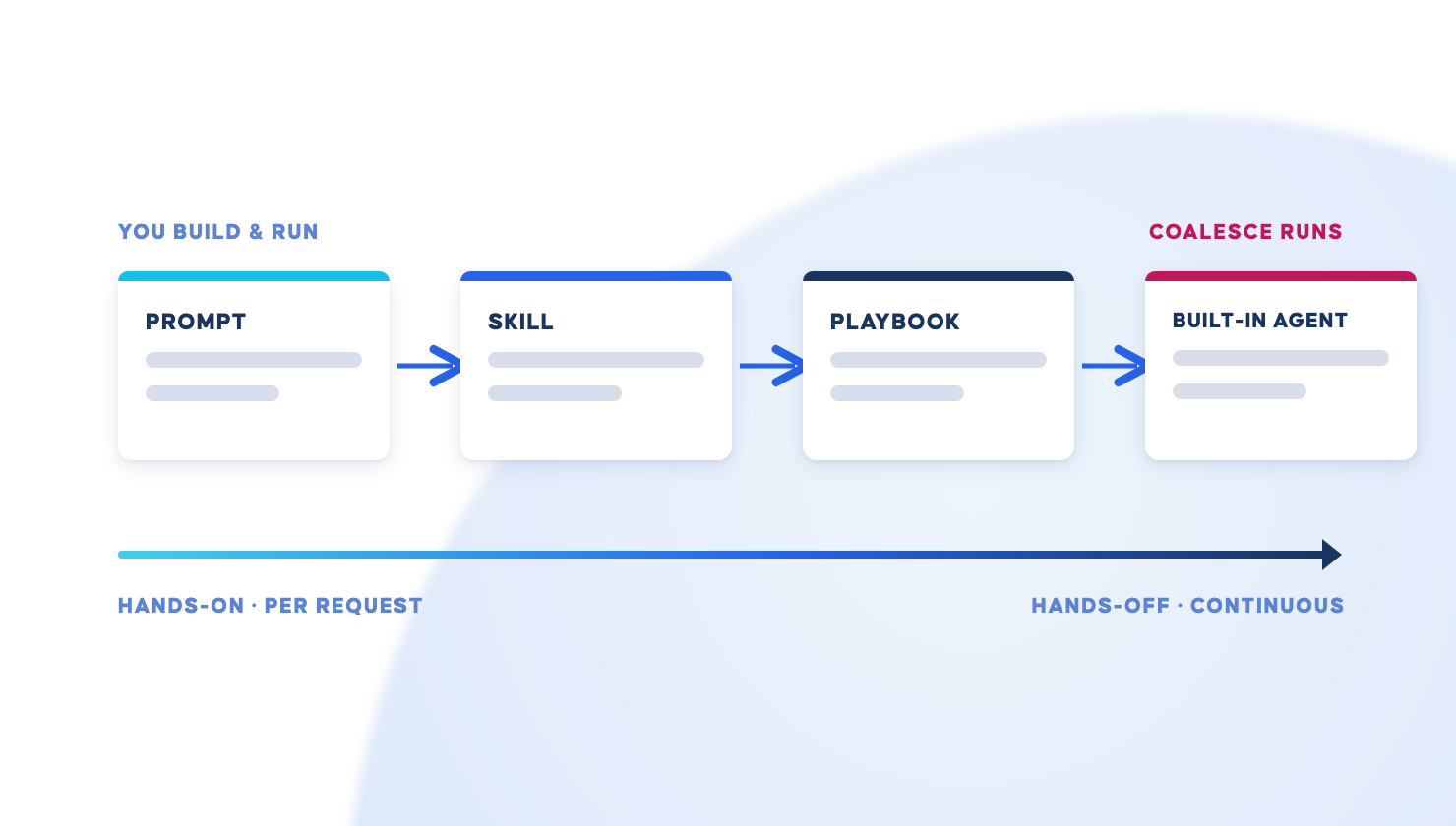
Putting workflows into production: production-grade playbooks like automated issue triage and governance rollout, the built-in agents Copilot and Scout, and when to use which.
The Problem
Everyone’s prompting. Few are shipping.
Every data team is experimenting with AI. But ask the same question twice, and you get different answers. When the capability isn’t there, the model improvises instead of stopping. And everyone starts from scratch — each engineer figures out their own prompts and workflows, the good ones die in a DM, and nothing scales.
Meanwhile, write access gets handed out like read access, and nobody has decided which AI workflows are safe to run against production.
This guide provides the framework to go from experiments to standards.
The Solution

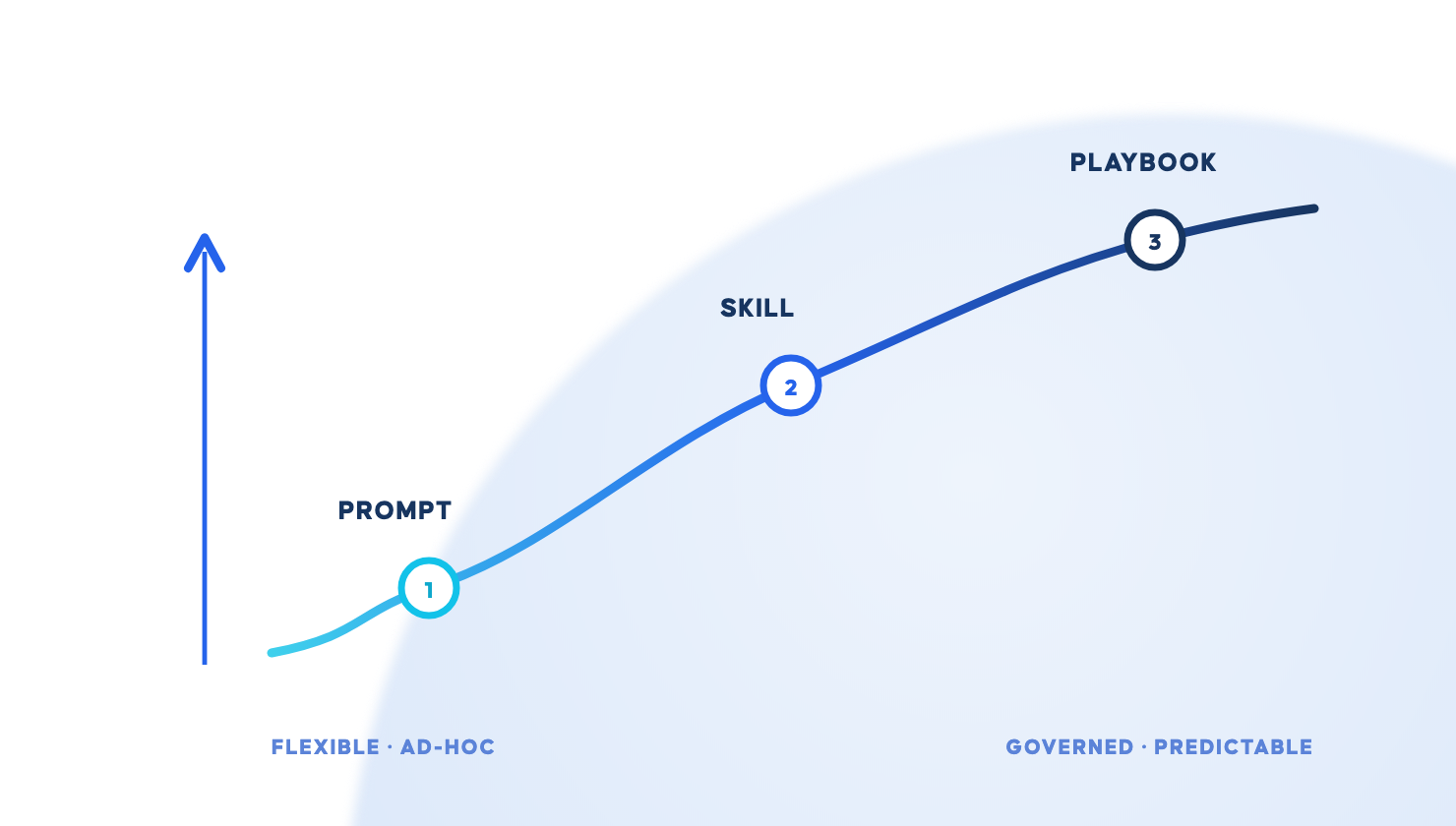
Level 1 Prompts
Ad hoc interactions to speed up data engineering and governance. Maximum flexibility, best for exploration.
Level 2Skills
Key workflows packaged as reproducible recipes the whole team runs the same way, every time.
Level 3 Playbooks and agents
Structured workflows with governance and orchestration built in — from scheduled playbooks to built-in agents like Copilot and Scout.
About the author

Mikkel Dengsøe · Director, Data Strategy, Coalesce
Mikkel led data teams at Google and Monzo, and has worked with hundreds of teams on optimizing their data reliability workflows. Today he leads data strategy at Coalesce.
Get the guide
Five chapters of prompts, skills, permission models, and playbooks — with real examples from workflows running inside Coalesce today. Explore the interactive web version + downloadable PDF.
Agentic data engineering means using AI inside the workflows and tools you already run, connected through MCPs. Instead of pasting context into a chatbot, the agent works against your platform directly — walking lineage, reading quality status, proposing fixes — with a person verifying the result. The guide maps three maturity levels: ad hoc prompts, reproducible skills, and production playbooks.
MCP (Model Context Protocol) is an open standard that lets a client like Claude or Cursor give a model structured context from other tools and data sources. Chapter 1 builds the working mental model: the server, its tools, and why the set of available tools defines the boundary of what an MCP can and cannot do.
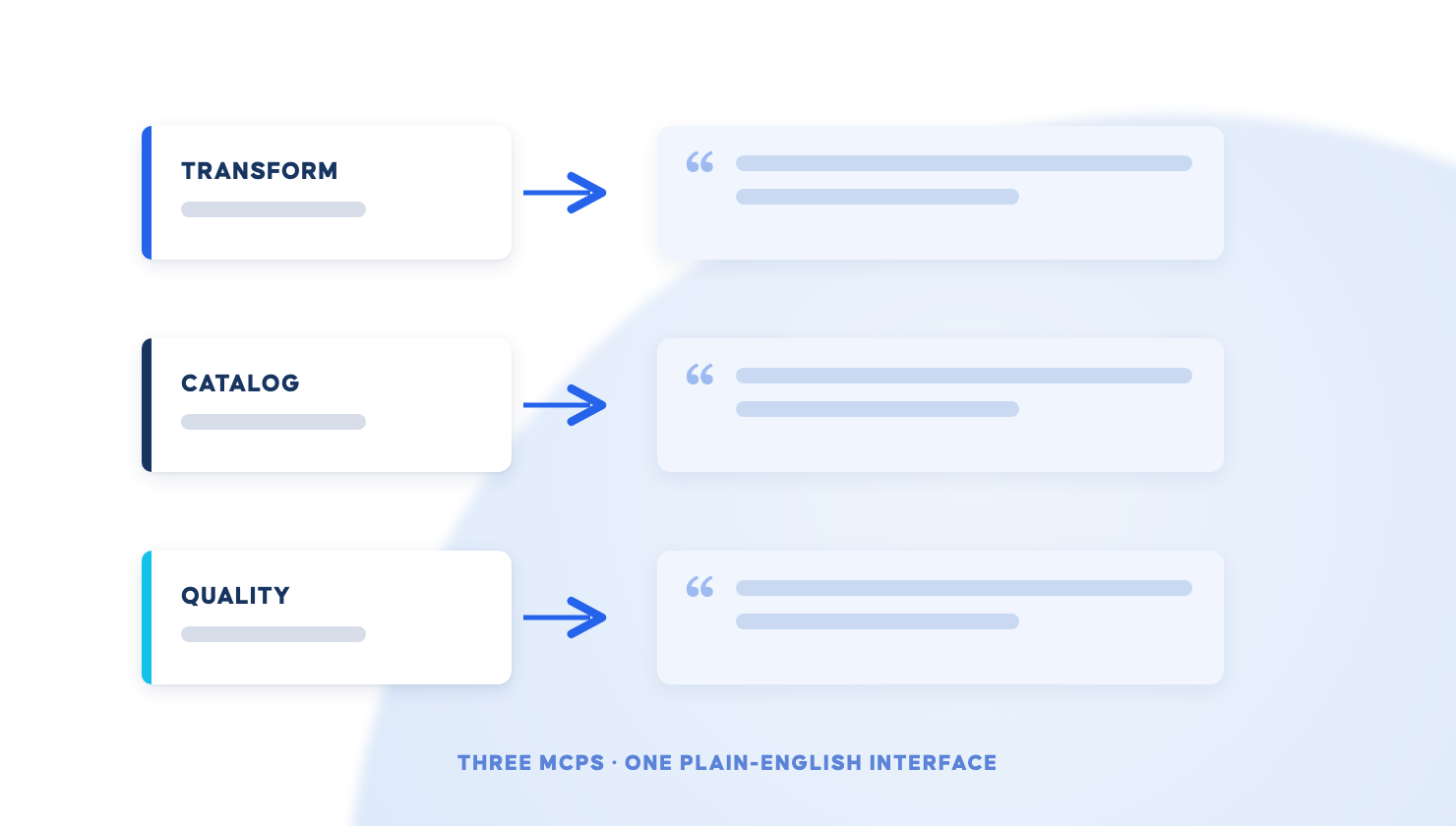
Coalesce ships an MCP for each product: Transform, Catalog, and Quality. Each exposes capabilities you’d otherwise reach through the UI — the Catalog MCP extracts column-level lineage to determine exact impact before a change, the Transform MCP implements those changes, and the Quality MCP runs full root cause analysis across issues, code changes, logs, and data profiles.
The examples are hands-on with the Coalesce MCPs, but most of the lessons — writing effective prompts, designing skills, deciding when to productionize — apply regardless of which tools your team uses.
Prompts are ad hoc and flexible but vary from run to run. Skills package a workflow into a reproducible recipe anyone on the team can run the same way. Playbooks are structured production workflows with governance and orchestration built in. Each level trades flexibility for reliability — and most teams run all three at once.
Four things: a role, a goal stated as the outcome you want, constraints the model must follow, and an output format. The guide shows the same testing task prompted too specifically, too vaguely, and just right — the fastest way to see where the balance sits.
Default to read-only, managed at the token level. Treat MCP write tokens the way you treat production database credentials — the same person who approves one should approve the other. And gate raw warehouse tools behind per-call approval, since an unbounded SELECT can run up compute costs or pull customer PII into a context window.
The rule of thumb from the guide: the more often you find yourself doing a workflow, and the more time it takes, the more likely it benefits from being converted into a skill. Skills also drop variance significantly — without one, the model makes structural decisions fresh every run.
Coalesce’s built-in agents. Copilot lives in Transform’s development workspace, turning natural language into governed transformations with a read/write toggle. Scout works in the background of Quality as an always-on data SRE, investigating every open issue and surfacing a recommended action with evidence — so you review conclusions instead of chasing alerts.
Ad-hoc prompts work well for speeding up individual workflows, but they create inconsistency across a team. The guide maps three maturity levels — exploratory prompts, reproducible skills, and deterministic team-standard playbooks — with the guardrails to roll them out safely.
Yes. Fill in the form to explore the interactive web version, and receive the full PDF in your inbox instantly.